
Before It Was The Peranakan Museum, This National Monument Was A School
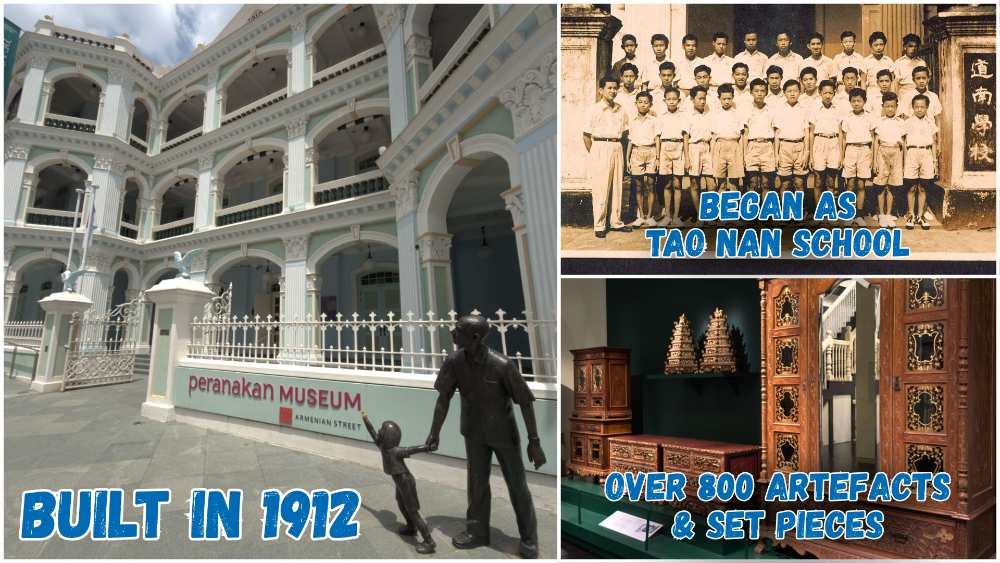
Today, visitors walk quietly through the Peranakan Museum's galleries filled with art and objects. Back then? I can only imagine these same corridors filled with schoolchildren running around and shouting between classes. That's because, from 1912 to 1982, this beautifully restored National Monument on Armenian Street was Tao Nan School, which feels especially apt with Children’s Day (2 Oct) coming up.
Overview
- Official name: Former Tao Nan School, now the Peranakan Museum
- Address: 39 Armenian Street, Singapore 179941
- Built: 1910-1912
- Original use: Tao Nan School
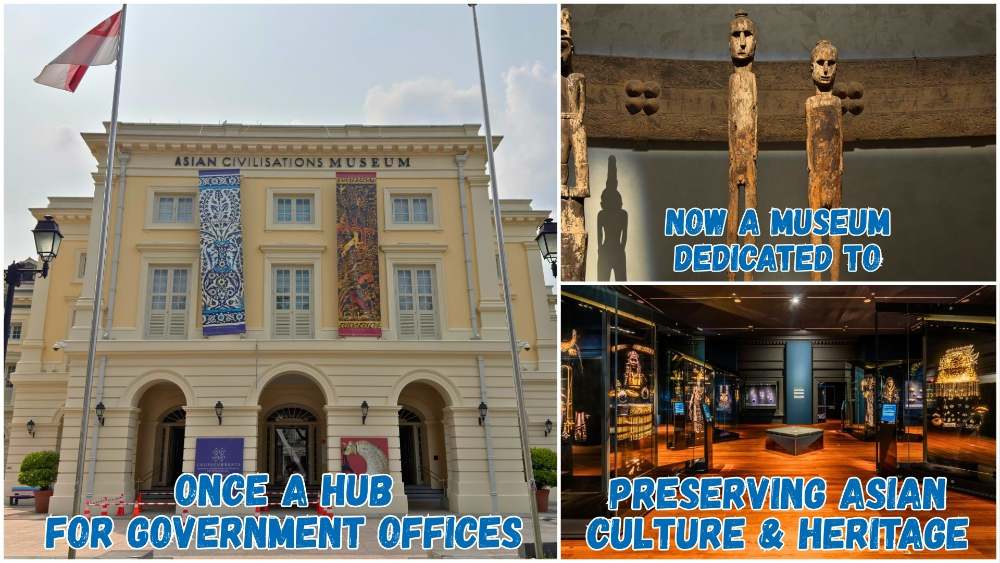
- Former use: Asian Civilisations Museum
- Current use: Peranakan Museum
- Year gazetted as a National Monument: 1998
- Nearest MRT station: Bras Basah
- Admission: Permanent galleries are free for Singapore Citizens and Permanent Residents
- Opening hours: 10am-7pm daily; till 9pm on Fridays
Why the Peranakan Museum is worth a visit
Even before you step inside, the building is already photogenic. There’s the symmetrical facade, rows of arched windows and columns, spacious verandahs and that bright central atrium inside.
As for all the spaces filled with art displays today? The galleries were once classrooms; the ground floor was the assembly hall, and the canteen and kitchen sat behind the building.
Museum etiquette asks visitors to keep their voices low and avoid running in the galleries. But decades ago, those same spaces were probably filled with children doing exactly the opposite (just picture the mayhem).
The origins of Tao Nan School
Chen Baochen (陈宝琛), a tutor of the last Qing emperor, was credited for naming the school Dao Nan Xue Tang (道南学堂, or Tao Nan School). The name Dao Nan was derived from the phrase wu dao qi nan (吾道其南), which can be loosely translated as "My code of behaviour is promulgated in Southeast Asia".
The first Tao Nan School was situated opposite Saint Andrew’s Cathedral in Siam House, the residence of Tan Kim Ching (陈金钟), the son of Tan Tock Seng. With an increasing enrolment, the rented Siam House was near its maximum capacity. The school leaders decided that it was necessary to erect a proper building for Tao Nan School.
The sugar baron Oei Tiong Ham (黄仲涵) gifted a sizeable sum for the purchase of the plot of land at Armenian Street. Among those who donated to setting up Tao Nan School were prominent Chinese merchants, including Low Kim Pong (刘金榜, who built Lian Shan Shuang Lin Monastery) and Tan Kah Kee (陈嘉庚, who founded The Chinese High School).
The school building was completed in March 1912 and stayed on its premises for close to 70 years. In 1982, Tao Nan School moved to its new campus in Marine Parade, where it remains today.
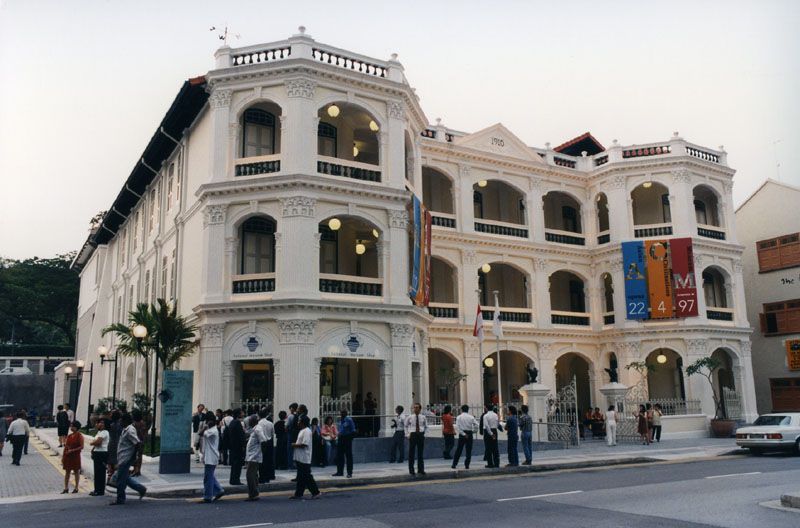
ACM's first opening at Armenian Street in 1997. | IMAGE COURTESY OF ASIAN CIVILISATIONS MUSEUM
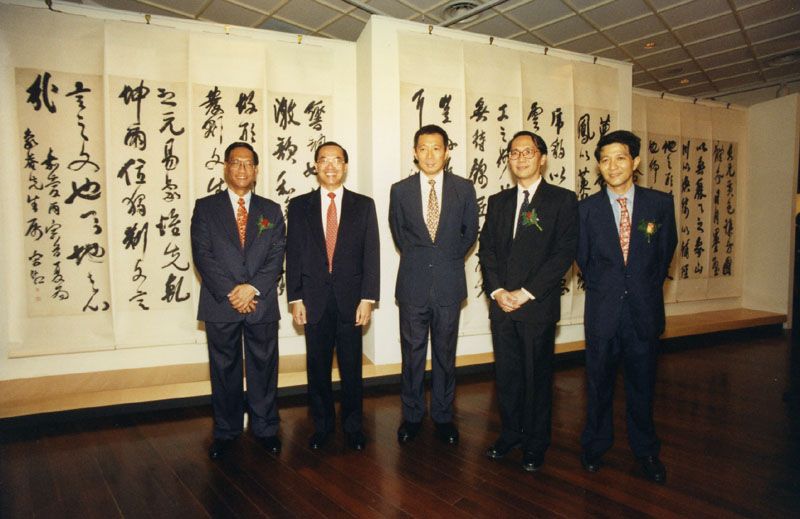
The opening in 1997 was graced by Mr Lee Hsien Loong (middle), who was then the Deputy Prime Minister of Singapore. | IMAGE COURTESY OF ASIAN CIVILISATIONS MUSEUM
From school to the first museum iteration
The original school building at Armenian Street was later refurbished as the Asian Civilisations Museum (ACM), which opened to the public on 21 Apr 1997. From 2006-2008, the building underwent redevelopment to house the world’s first Peranakan Museum, which officially opened to the public on 25 Apr 2008.
It closed again for a major revamp in 2019 before reopening in Feb 2023 after four years of renovation (delayed by the COVID-19 pandemic). The museum explores the culture of Peranakan communities in Southeast Asia, and possesses one of the finest and most comprehensive public collections of Peranakan objects.
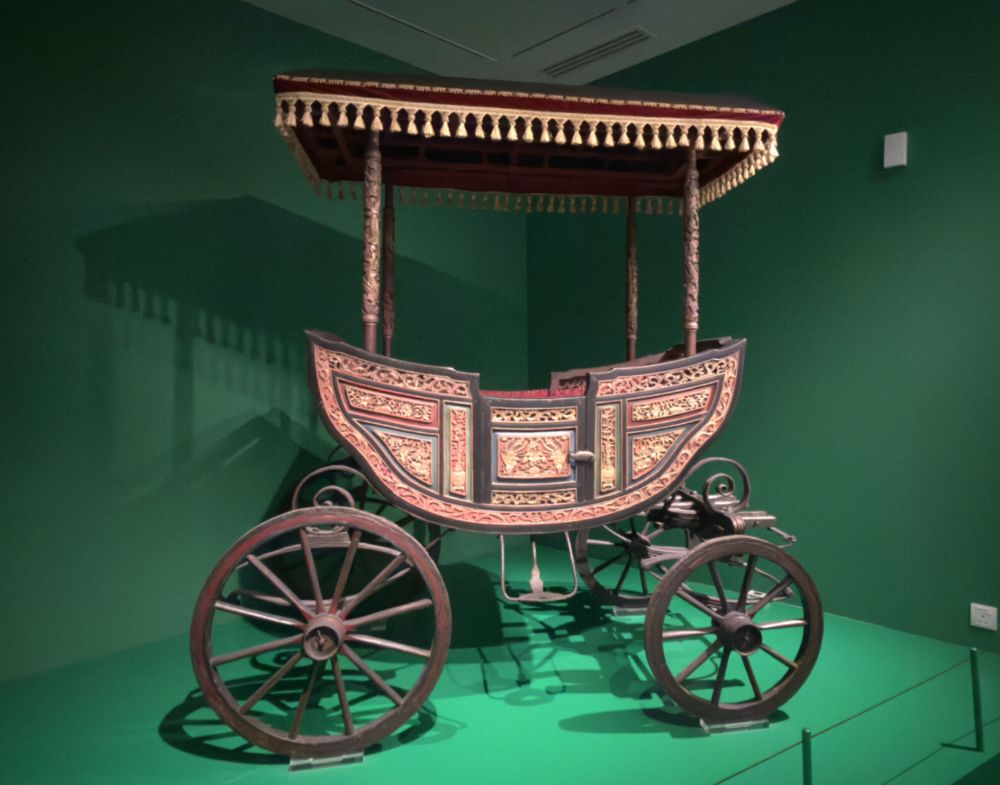
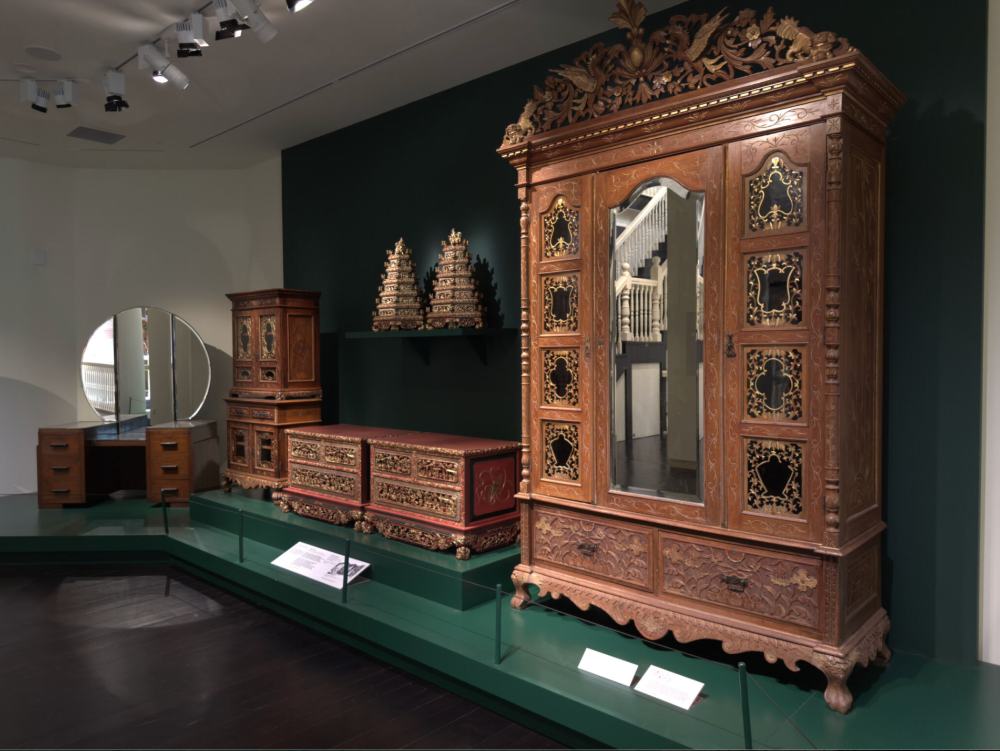 IMAGES: NG KAI
Displaying over 800 articles (ranging from newly acquired or generously donated items to well-loved artefacts and set pieces), the museum explores the Peranakan identity through universal themes of “Origins”, “Home”, and “Style”.
If you think about it, the current Peranakan Museum and ACM have effectively swapped historic buildings over the years, almost like museum musical chairs.
What to look out for when you visit
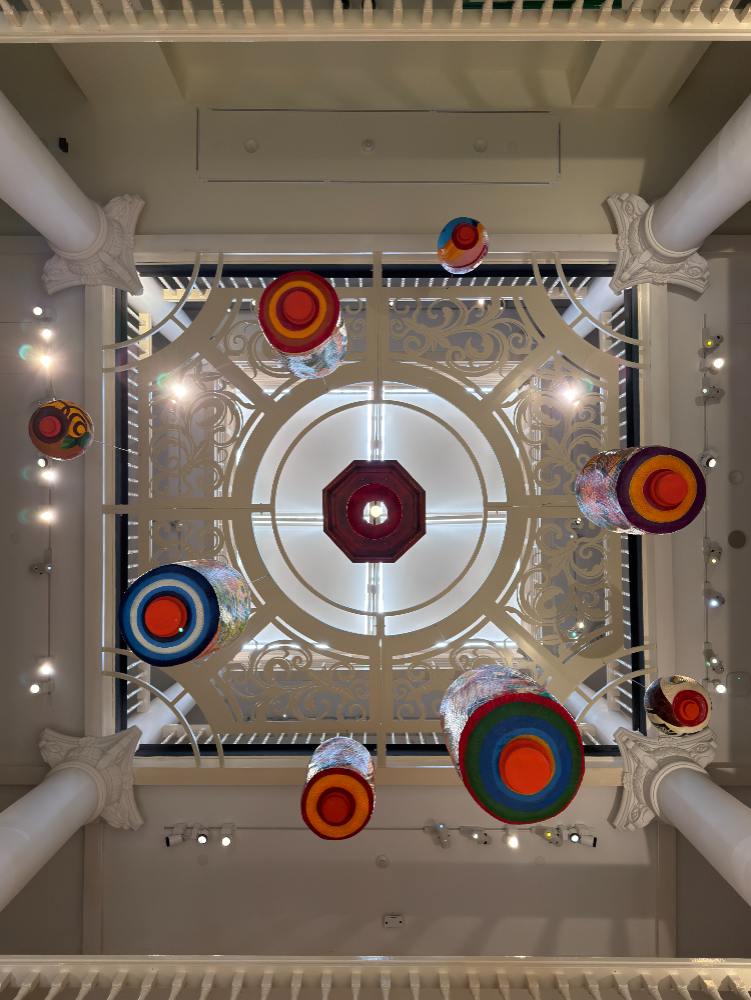
The view from the ground floor. | IMAGE: NG KAI
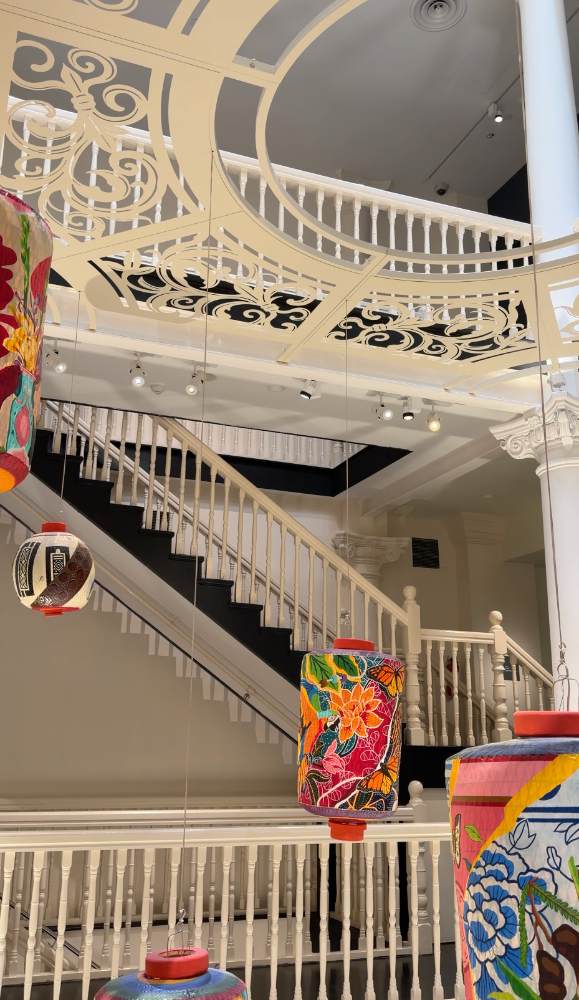
The view from the second floor. | IMAGE: NG KAI
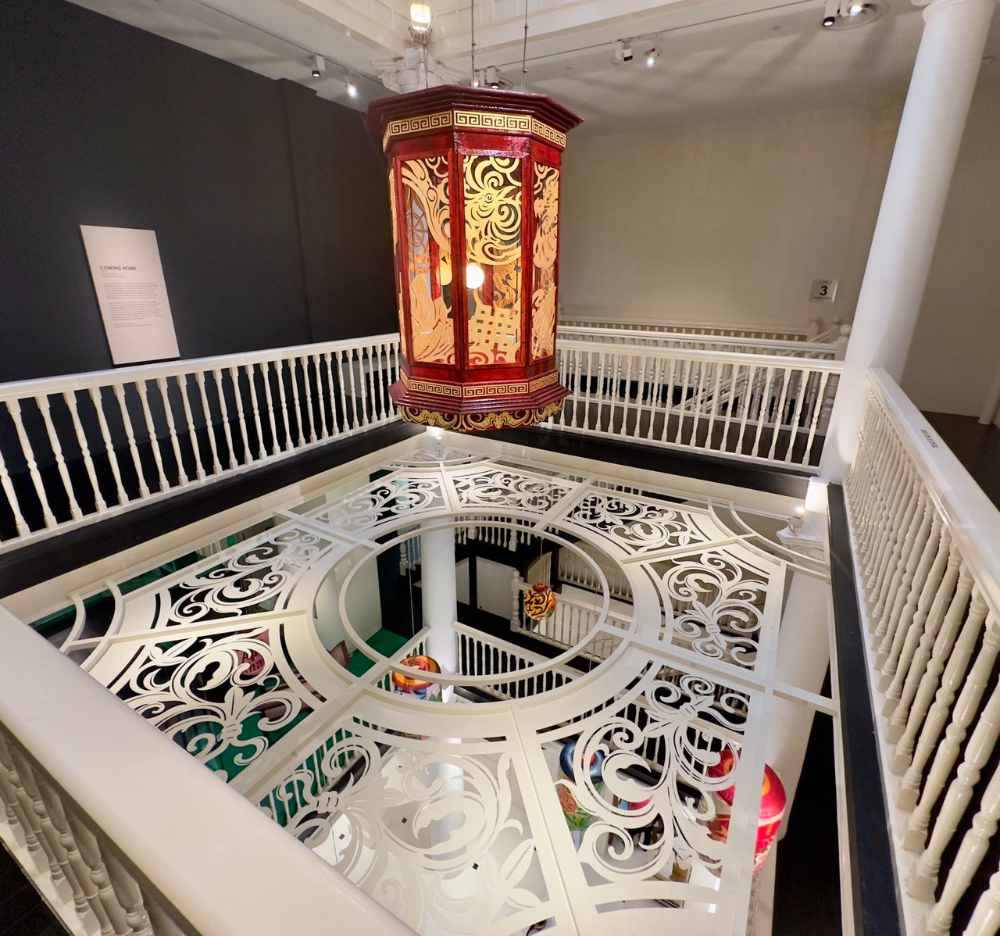 The view from the third and highest floor. | IMAGE: NG KAI
The spaces that used to be classrooms
One detail that changed my perspective of the museum? The rooms surrounding the central atrium weren’t originally designed to display jewellery, textiles and ceramics - they were classrooms. The assembly hall occupied the ground floor, while students had lessons across all three levels.
It made me wonder what this place would've been like if the students back then had social media. With those arched windows, grand staircases and that magnificent facade, the school-day photo dumps would’ve levelled up. Every recess period would see someone taking photos somewhere.
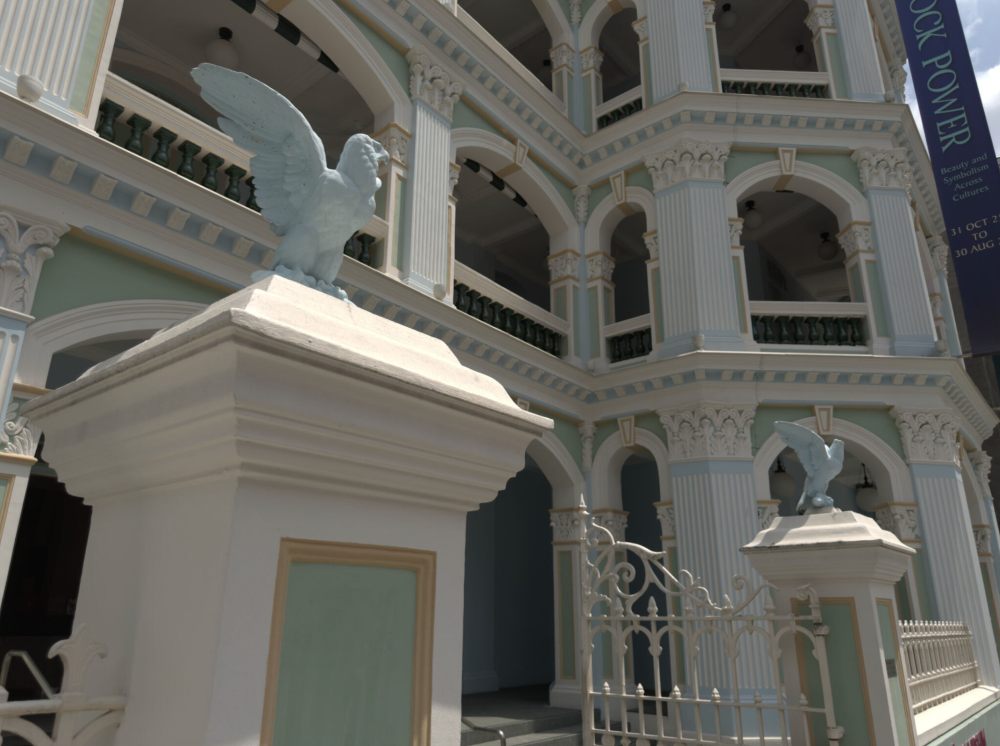
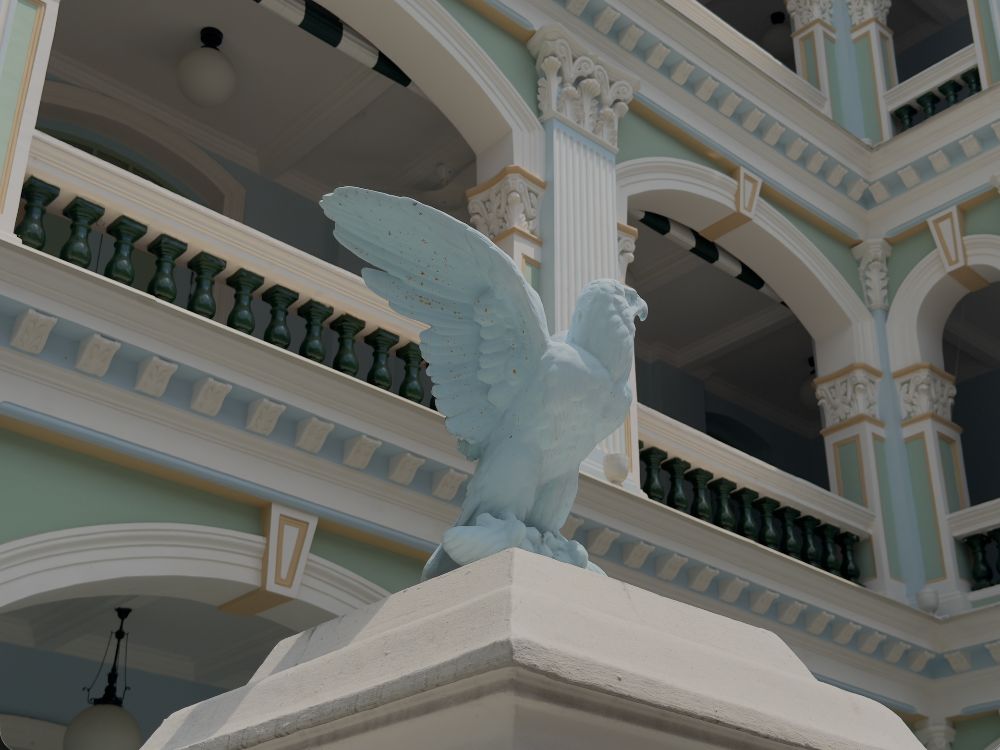 IMAGES: NG KAI
Look out for two huge eagles outside
I initially assumed the pair of cast-iron eagles at the entrance were simply decorative. But they’re actually surviving pieces of Tao Nan School, each weighing around 200kg.
There are different theories about what they symbolise: some presume they were installed to ward off evil, while others believe they represent the excellence which Tao Nan School strives for, as the character ying (英) in the term jing ying (精英) – which means "cream of the crop" – is a homophone of ying (鹰), or "eagle".
When Tao Nan School moved to Marine Parade in 1982, the two eagle sculptures were brought to its new premises. However, in 1996, the sculptures were returned to the newly restored former building and reinstated in their original locations on the gate posts.
Lowkey, the school moved on, but two of its most recognisable “students” eventually came home.
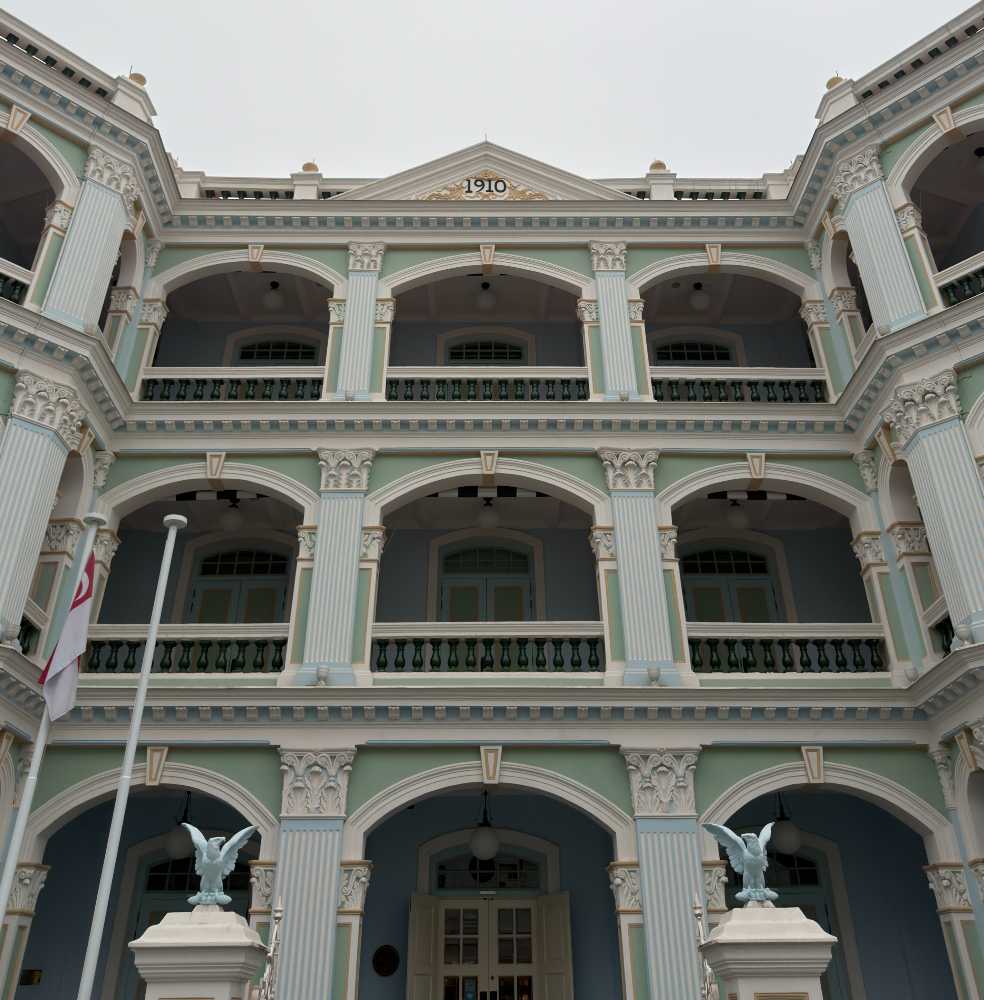 IMAGE: NG KAI
The Neoclassical facade
Designed by the Municipal Engineer’s Office of Singapore, the former Tao Nan School’s architecture is eclectic.
Neoclassical elements are featured on the building’s facade, and include ornate Corinthian capitals atop the many fluted columns (those with shallow grooves) and pilasters (rectangular columns). The building also exhibits various tropical adaptations, including spacious verandas and large windows that allowed the edifice to be naturally ventilated before air-conditioning was finally installed.
Thinking of Children's Day plans for your kids?
The Peranakan Museum is a pretty fitting place for a kid-friendly outing. There’s the Anak Anak Storytelling Guide, a free self-guided experience for children aged four and above. Kids can scan QR codes around the galleries to hear stories inspired by objects such as an ang ku kueh mould, a beaded lion and a first-birthday tradition, with an activity trail to follow along.
There’s a nostalgic full-circle moment here, too. More than a century after Tao Nan students first started their schooling journey inside this building, children are still coming here to learn.
Wait, what makes something a National Monument?
In Singapore, National Monuments are buildings, structures or sites recognised for their national significance and value to our built heritage. They are gazetted by the Preservation of Sites and Monuments, a division of the National Heritage Board, which is why the title is reserved for places that carry especially important historical, architectural, social or cultural meaning.
As of 2026, Singapore has 77 National Monuments. Some are obvious landmarks, like the Padang, St Andrew’s Cathedral and Fort Siloso. Others are places you may have walked past without a second thought, which is exactly why this series exists.
One National Monument at a time, we’re here to uncover the stories hiding in plain sight.
For the latest updates on Wonderwall.sg, be sure to follow us on TikTok, Telegram, Instagram, and Facebook. If you have a story idea for us, email us at [email protected].